Why Use Spray Foam Insulation for Interior Walls
Interior walls don’t usually get the same attention as attics or exterior walls when it comes to insulation, but they can make a real difference in noise control and room-to-room temperature swings. Acoustical spray insulation is increasingly used on interior walls for that reason, since it seals gaps that batt insulation tends to miss and cuts down sound transfer between rooms more effectively.
It’s becoming a common upgrade for homes with open floor plans or shared walls between living spaces, where spray foam insulation in Mississauga gets used specifically for sound and temperature control. Before deciding if it’s the right fit, it helps to understand what spray foam insulation costs typically look like and where the extra expense actually pays off.
At EcoStar Insulation, our team of experts provides complimentary cost estimates for spray foam insulation. Using high-quality materials and trained in skilled spray foam application, our team is available for your insulation projects.
Here is why you should consider spray foam insulation for interior walls.
What Spray Foam Does Differently on Interior Walls
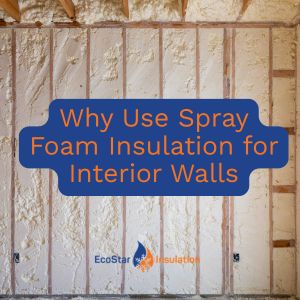 On exterior walls and attics, spray foam is mostly about blocking outside air and controlling moisture. On interior walls, the job shifts toward sound control and evening out temperatures between rooms, especially rooms with different heating and cooling needs, such as a home office next to a laundry room or a bedroom above a garage. Spray foam expands to fill gaps around outlets, framing, and pipes that batt insulation typically leaves exposed.
Acoustical Spray Insulation and Cutting Down Room-to-Room Noise
Sound travels easily through empty wall cavities, which is why open floor plans and shared walls tend to carry noise between rooms more than people expect. Acoustical spray insulation fills the cavity, reducing how much sound passes through in both directions. It’s a common addition in Mississauga homes with home theatres, nurseries next to living spaces, or multigenerational layouts where privacy between rooms matters.
How It Compares to Batt Insulation for Interior Applications
Batt insulation costs less upfront and works well in some interior applications. Still, it relies on a snug, gap-free fit to perform properly, which can be difficult to achieve around wiring, plumbing, and irregular framing. Spray foam expands into those gaps automatically, which is part of why it may outperform batt insulation for sound control in certain applications, even though it costs more per square foot.
What Affects Spray Foam Insulation Costs?
Spray foam insulation costs depend on the size of the area being insulated, wall accessibility, and whether open-cell or closed-cell foam is used. Closed-cell foam generally costs more and provides a higher R-value, while the right choice for sound control depends on the wall assembly and the needs of the space. Homes with finished walls that need to be opened will also cost more than new construction or a renovation where the studs are already exposed.
Is Spray Foam Worth It for Interior Walls Specifically?
For homeowners dealing with noise between rooms or uneven temperatures around interior walls, spray foam may solve the problem more completely than adding extra batt insulation or acoustic panels alone. It’s not necessary for every interior wall, but it’s worth considering wherever sound or temperature control has been a recurring issue.
Trust Your Local Spray Foam Insulation Experts
At EcoStar Insulation, the spray foam insulation in Mississauga that homeowners request often includes this type of acoustical spray insulation application alongside our attic and basement insulation work. If noise or temperature swings between rooms have been a persistent issue, we can walk you through whether spray foam is the right solution for your space.